Tuff Shed Site Prep & Utilities: The Riverside Owner’s Guide
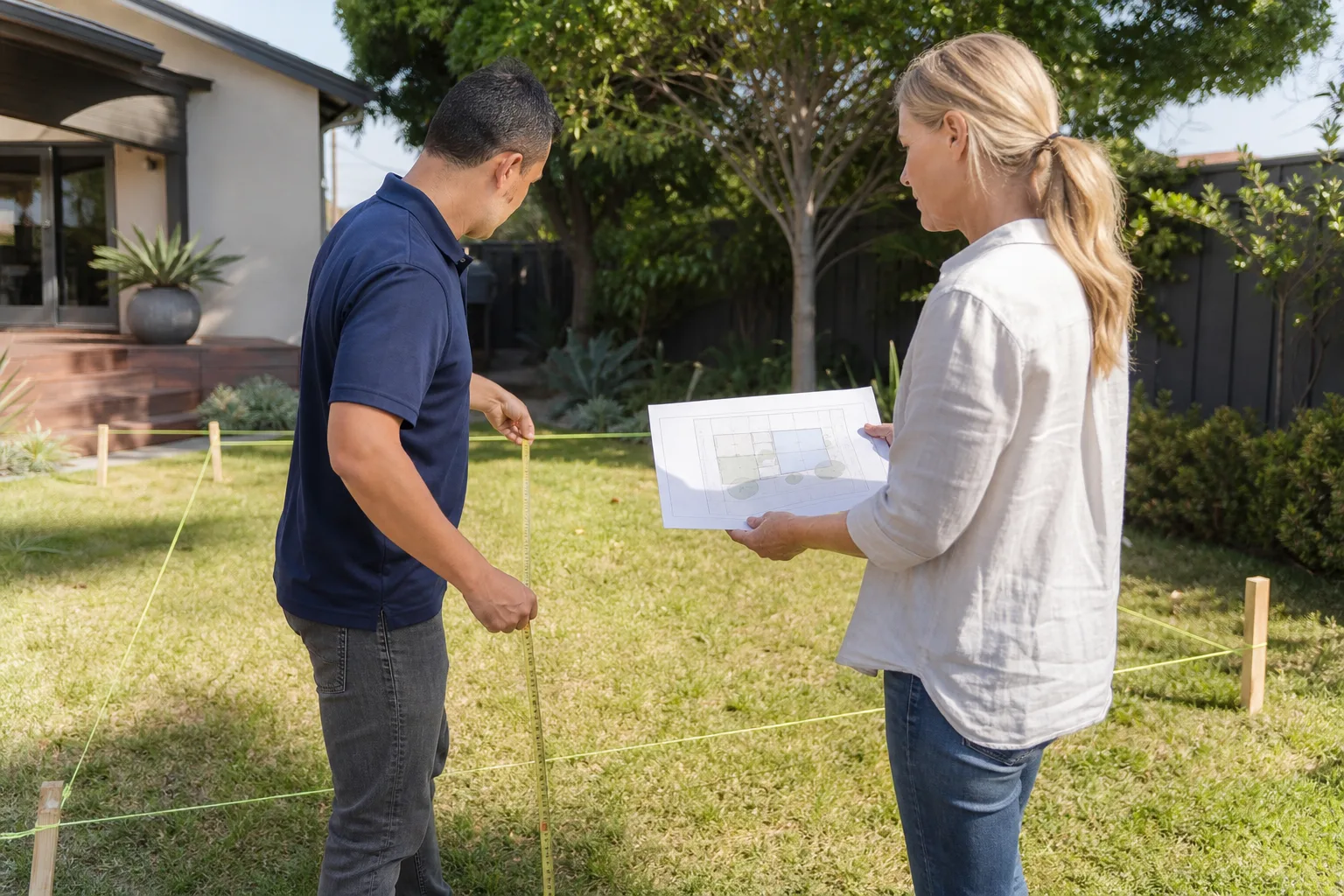
Site prep and utility work for a Tuff Shed build in Riverside typically runs between $2,800 and $7,500 installed, depending on pad size, soil conditions, and how far your electrical or water lines need to travel. We stock the materials for most standard Tuff Shed site packages on our trucks and can usually start within a week of your free estimate. The way most Riverside owners discover their site prep was done wrong is the same every time: a door that binds by month six, a shed floor that’s started to sink at one corner, or an outlet that trips the breaker whenever the space heater kicks on.
If your shed was dropped onto bare dirt or a thin gravel pad by a previous owner or a big-box installer, the problems you’re seeing now were baked in that day. The good news is it’s fixable without tearing the shed down, but you’ll want it done before Riverside’s summer heat and winter rain cycles make the movement worse.
Key Takeaways
- Most Tuff Shed site failures in Riverside trace back to the pad, not the shed
- Installed site prep and utility work runs $2,800 – $7,500 depending on scope
- Utility trenching distance from your main panel or water line is the biggest price driver
- We’re an independent Riverside contractor, not affiliated with Tuff Shed corporate
- Every job gets a written price before work starts, no exceptions
Which Tuff Shed Models This Applies To
Every Tuff Shed product, from the smallest Pro Shed series up through the Premier Tall Barn and the two-story Sierra models, sits on the same fundamental requirement: a level, load-bearing foundation with proper drainage. Where things get specific is in the floor framing and anchor spacing. The Ranch and Pro series use 2×4 floor joists on 16-inch centers, which tolerate minor grade variation better than the Premier series, which steps up to 2×6 joists and demands a flatter pad because the wall framing is heavier and less forgiving of a foundation that’s moved.
You can identify your shed series on the metal ID tag riveted to the interior of the door jamb. It’ll have the model name and the serial number, which is what Tuff Shed uses to pull your original build sheet. If the tag’s gone, measure the wall studs: Pro and Ranch run 2×4, Premier runs 2×6. For utilities, the compatible panel and conduit specs depend on whether your shed is a standard storage build or a Tuff Shed Pro Studio, which has a thicker floor package designed for finished interior work and needs a subpanel rated for whatever you’re planning to run.
On the OEM-versus-aftermarket question: Tuff Shed doesn’t manufacture their own site prep materials. They specify generic construction materials, concrete, gravel, pressure-treated lumber, and standard electrical components. That means there’s no “Tuff Shed brand” gravel or anchor bolt. The right choice is always a materials spec that matches or exceeds what their installation guides call for. We spec that ourselves and show you the line items before we dig. Aftermarket doesn’t mean inferior here; it means the same concrete and the same Schedule 40 conduit you’d get anywhere, priced honestly.
Signs Your Tuff Shed Site Prep & Utilities Is Failing
- Doors that stick or won’t latch. This is almost always a pad that’s settled or heaved at one corner. The shed frame twists, the door opening goes out of square, and that’s why the latch doesn’t line up anymore. It’s a foundation problem wearing a door problem’s clothes.
- Water pooling around the base after rain. A proper pad slopes away from the shed in all directions. If water stands against the skids or the bottom plate, your drainage grade either wasn’t built or has eroded. In Riverside’s clay-heavy spots, this gets worse every wet season.
- Visible gaps under the floor frame. Grab a flashlight and look under your shed. If you can see daylight between the skids and the pad in some spots but not others, the pad wasn’t level to begin with or the ground beneath has compacted unevenly.
- Breaker tripping when you run more than one tool or appliance. Most Riverside sheds are wired with a single 20-amp circuit running off the main panel. If you’re running a saw and a shop vac at the same time and the breaker pops, the circuit was undersized for actual use, not a wiring fault. You need a subpanel, not a repair.
- Outlets that work sometimes, not others. This points to a connection that’s loose in a junction box or, more often in Riverside, a conduit run that wasn’t glued properly and moisture got in. Either way it’s a fire hazard, not a quirk.
Replacement Cost & What’s Included
Here’s what Riverside homeowners actually pay for this kind of work, based on what we see in the field:
| Scope | Typical Range |
|---|---|
| Gravel pad correction (re-grade, add compacted base) | $1,200 – $2,500 |
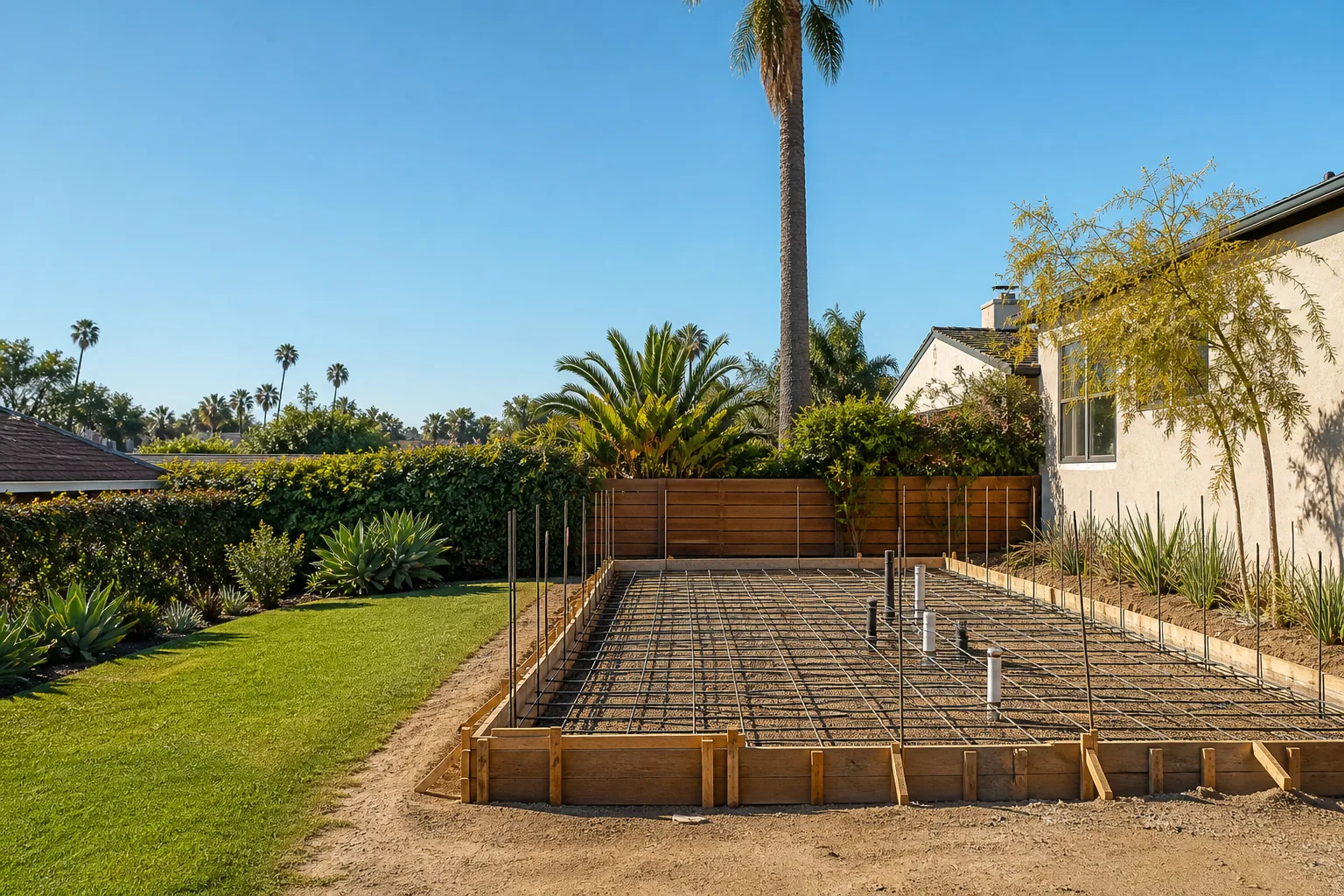
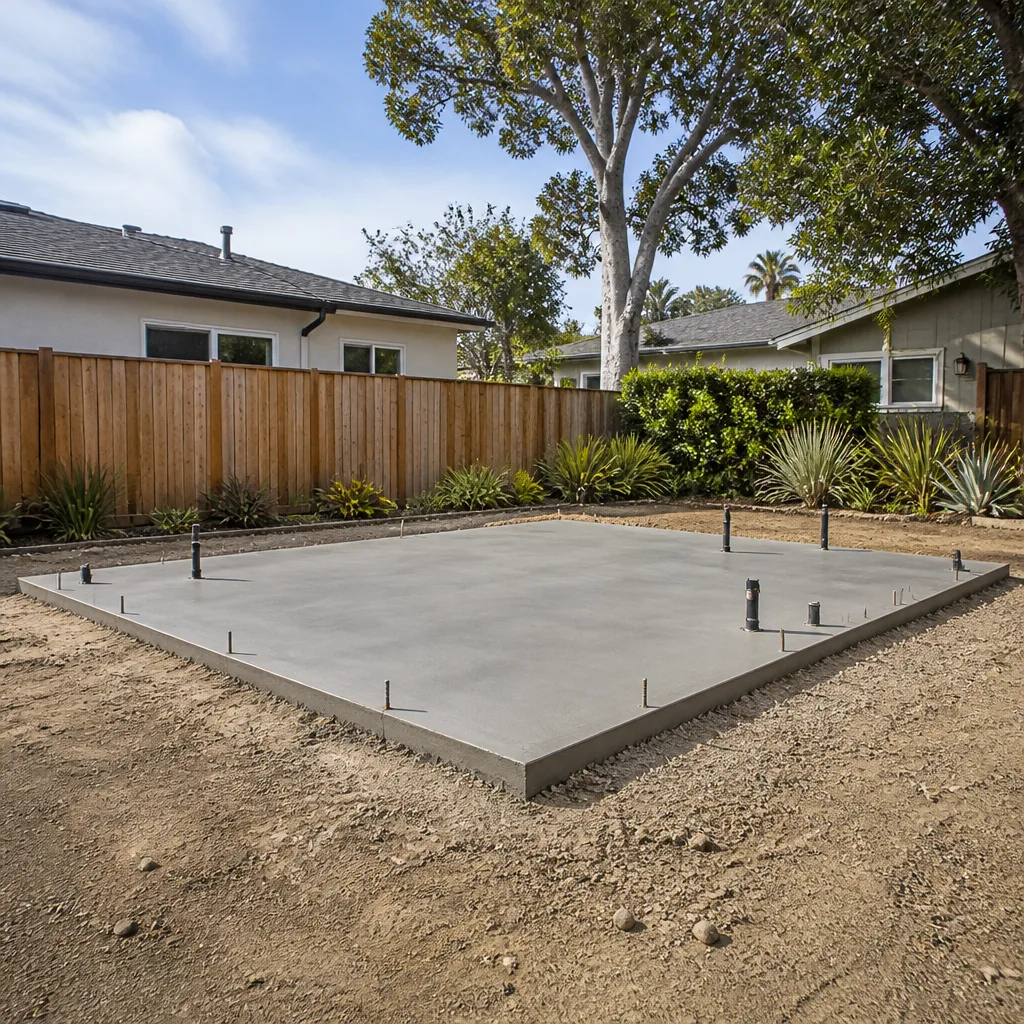
| Concrete pad replacement (up to 12×16) | $3,500 – $5,800 |
| Electrical subpanel install (60-amp, includes trench up to 30 ft) | $1,800 – $3,200 |
| Water line run (includes trench and frost line depth) | $1,400 – $2,600 |
| Full site prep + utilities for a new Tuff Shed build | $2,800 – $7,500 |
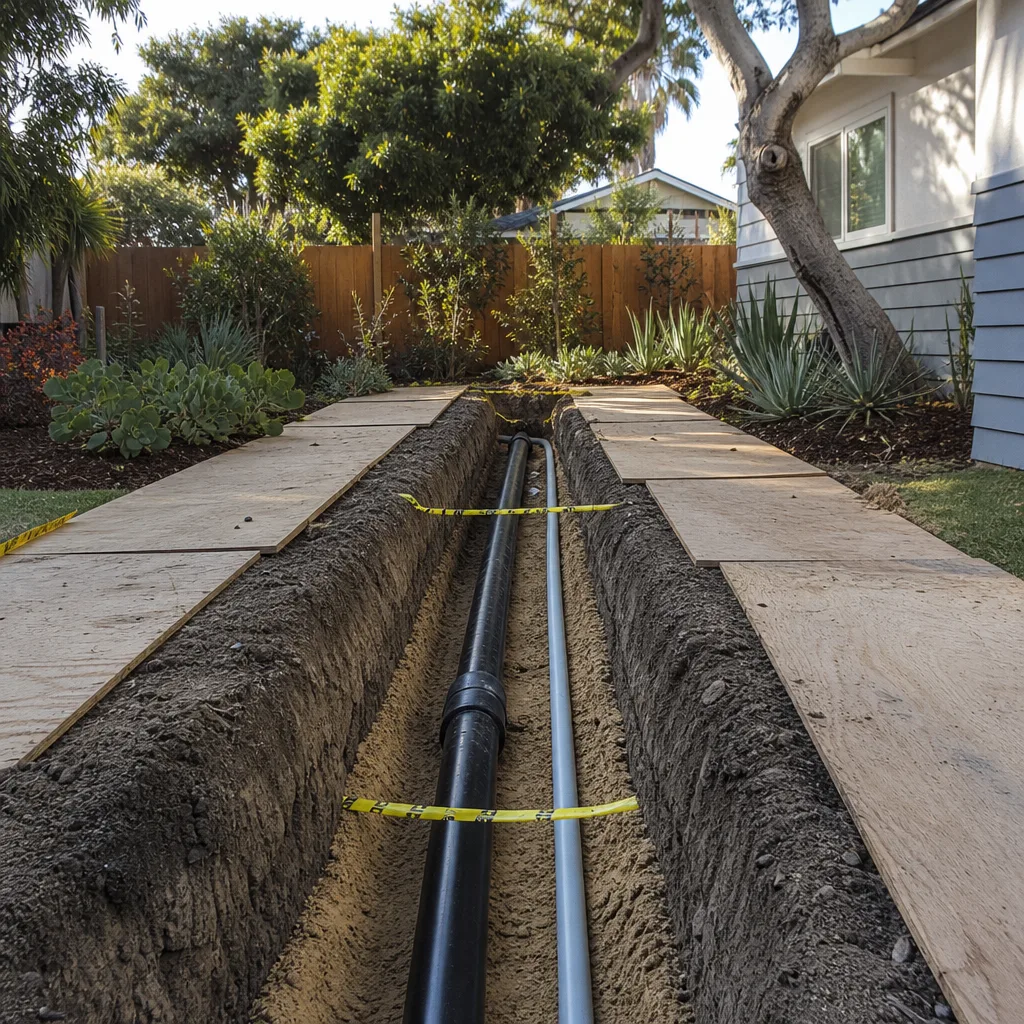
The biggest variables in Riverside are soil type and distance. The hillside lots near Box Springs have rock that slows trenching; the older flat lots near the Mission Inn district usually dig easy. Distance from your main panel to the shed determines how much wire and conduit we pull, and that’s a straight line-item cost. You’ll get a written price before any work starts, with every material line and labor hour spelled out. And the work is covered by our 365-Day Done Right Promise: if something fails within the first year, we come back and make it right, free.
DIY or Call Us?
There’s one safe DIY check, and it’s worth doing before you call anyone. Walk the perimeter of your shed with a four-foot level and check the pad on all four sides. That tells you whether you’re dealing with a drainage problem or a structural settlement problem, which helps you describe the issue accurately and avoid paying someone to diagnose what you already know.
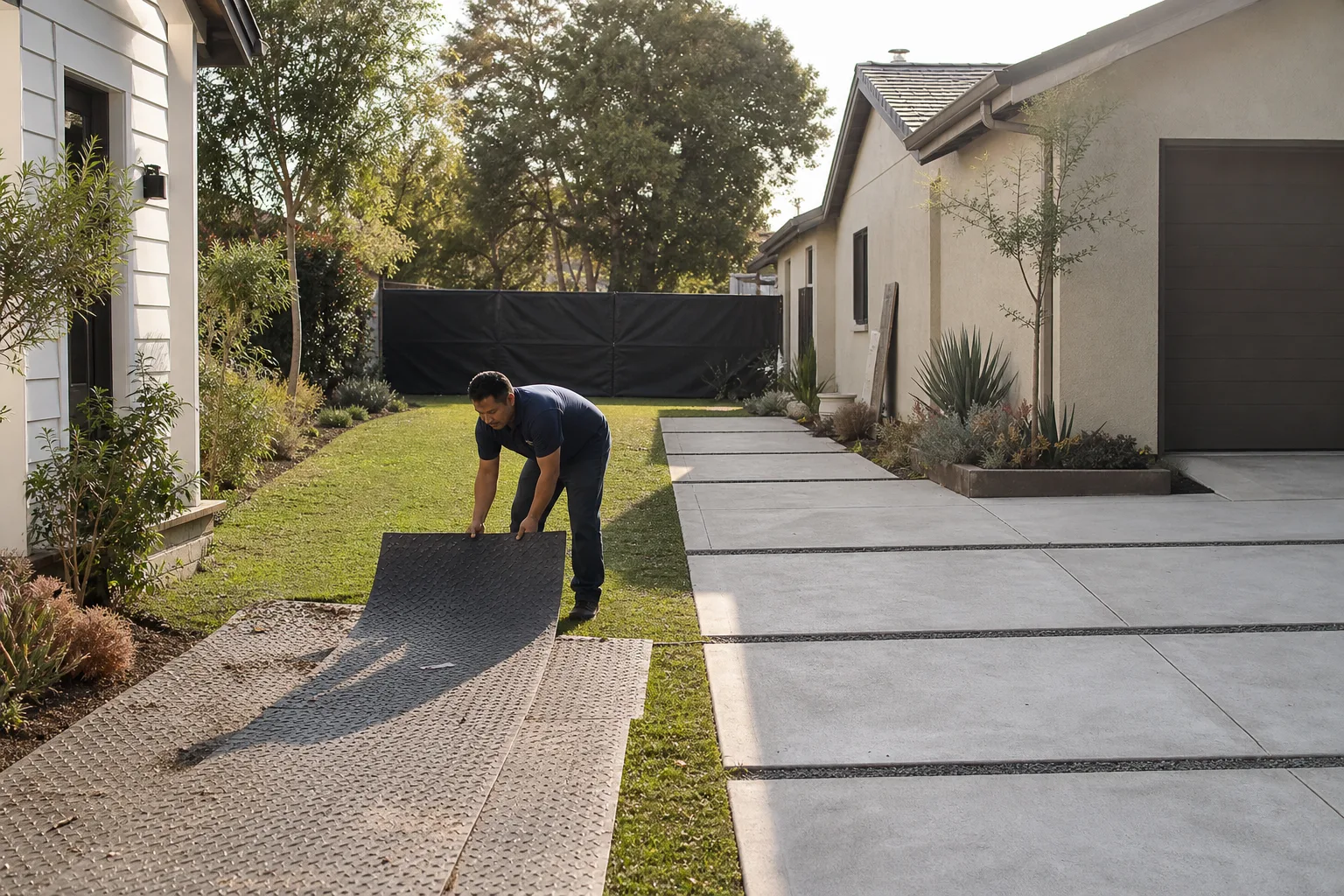
Where Riverside DIY projects go wrong is in the heavy work. Compacting a sub-base properly means bringing in a plate compactor and doing it in lifts, not just dumping gravel and raking it flat. Undercutting a settled corner and re-pouring without addressing the drainage that caused it means you’ll do the job again in two years. And trenching for electrical is genuinely dangerous: a misplaced shovel can hit your water line, your gas line, or buried Romex from some previous owner’s handyman project. Digging near utilities is the one place we always tell homeowners to stand down. If you’ve got a sagging pad or a sputtering circuit, call us at (831) 292-4191 and we’ll come look. The estimate is free, and the number we give you is the number you’ll pay.
FAQs
A properly built gravel pad in Riverside should last 10 to 15 years before needing re-grading, and a concrete pad should last 25 or more. The catch is that “properly built” includes compacted sub-base and drainage slope, which is exactly what gets skipped on the cheapest installs. If your pad failed in under five years, it was undercut in the build, not a lifespan issue. Call (831) 292-4191 and we’ll tell you honestly whether you’re looking at a patch or a redo. Estimates are free.
In most Riverside cases, yes. A single settled corner can be undercut, lifted with a jack, and re-packed without touching the rest of the pad. If the whole pad has sunk evenly, you’re usually looking at a top-up of compacted base and re-grading, which is less expensive than full replacement. Full replacement only makes sense when the concrete has cracked through in multiple places or the drainage pattern needs to change completely.
Most gravel pad corrections finish in one day. Concrete pads run two to three days, with a day for forming and pouring and a day or two of cure time before we set the shed back or shift load onto it. Electrical subpanel work is typically one day from trench to cover plate. When we give you an arrival window, that’s the window. And each day the crew leaves the yard cleaner than they found it, that’s The Kingswell Way on every job.
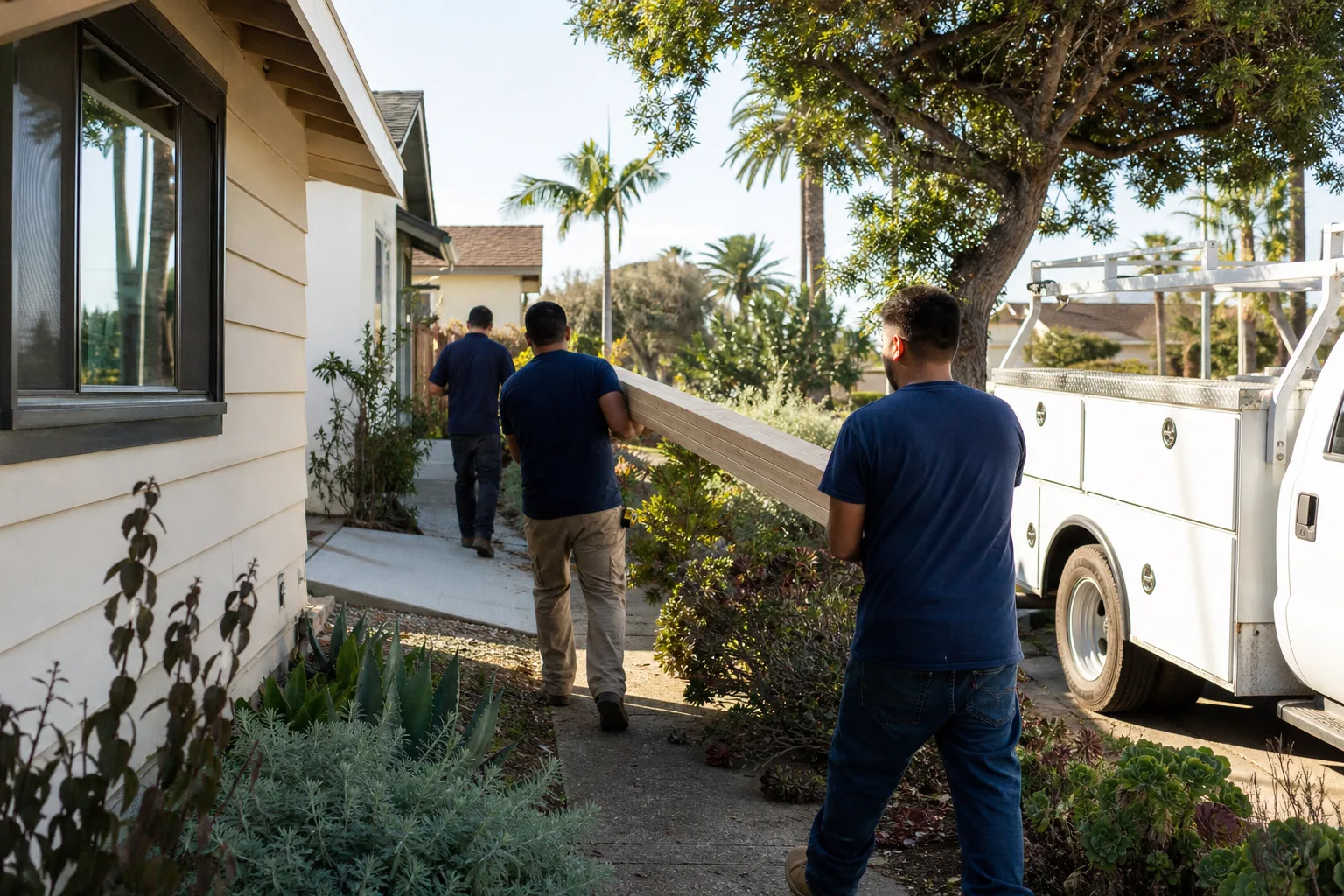
We stock everything on our trucks: compacted base, gravel, pressure-treated skids, anchor hardware, conduit, panels, and the right wire gauges for standard Tuff Shed models. We also work with Abodu, Cover, and Dvele builds when owners want their shed integrated with a prefab ADU project. If your shed is here in Riverside, we have what it needs. If you’re not sure, call (831) 292-4191 and describe what you’re seeing. A live person answers, 24 hours a day.
If the number isn’t on the page, it isn’t a real quote. That’s how we’ve done business since day one, and it’s not changing. Russ Delmar and the Lodgewick ADU Riverside crew have been doing this work across Riverside for years, including a stretch of garage conversions in the older neighborhoods near the Mission Inn district. We’ll give you a straight price, a straight plan, and a written guarantee on the work before we ever pick up a shovel.
Call (831) 292-4191 for your free site prep and utilities estimate.
Written by Russ Delmar, Owner, Lodgewick ADU Riverside at Lodgewick ADU Riverside, serving Riverside and nearby areas.